Effective Crypto Investment Strategies: Mechanics, Risk Vectors, and Execution Frameworks

Crypto investment strategies differ from traditional asset allocation in execution layer: custody models, settlement finality, liquidity fragmentation across chains and venues, and the ability to programmatically enforce position parameters onchain. This article examines portfolio construction mechanics, risk management techniques specific to crypto markets, and the operational dependencies that determine whether a strategy remains executable under adverse conditions.
Portfolio Construction Mechanics
Effective allocation starts with recognizing that crypto assets trade 24/7 across fragmented liquidity pools, creating pricing discrepancies and execution risk absent in traditional markets. A portfolio structure needs explicit rules for rebalancing frequency, slippage tolerance, and venue selection.
Allocation by risk profile:
A conservative allocation typically holds 60-80% in assets with multi year operating history and deep liquidity (BTC, ETH), 10-20% in established protocol tokens with clear cash flow or utility, and 0-10% in newer projects. Aggressive portfolios invert this, accepting illiquidity and higher drawdown potential for asymmetric upside.
Rebalancing triggers:
Time based rebalancing (monthly, quarterly) works when transaction costs are low. Threshold based rebalancing triggers when an asset drifts beyond a target band (e.g., ±5% from target weight). The choice depends on gas costs relative to portfolio size. For portfolios under $50k, quarterly rebalancing often minimizes cost friction. Larger portfolios can justify tighter bands.
Venue and liquidity considerations:
Execution quality varies significantly. Centralized exchanges offer tight spreads for major pairs but introduce custody risk. DEX aggregators (1inch, Cowswap) route through multiple liquidity sources but charge variable fees and are sensitive to gas prices. For positions above $100k equivalent, splitting orders across venues reduces slippage but requires tracking multiple custodial or wallet states.
Dollar Cost Averaging vs. Lump Sum Timing
Dollar cost averaging (DCA) accumulates an asset through fixed interval purchases regardless of price. This reduces timing risk but underperforms lump sum investment when the asset trends upward over the accumulation period. Historical data from 2016-2023 shows lump sum outperformed DCA in approximately 65-70% of rolling 12 month periods for BTC and ETH, though this reflects a predominantly bull market era.
DCA becomes operationally relevant when deploying capital exceeds single trade liquidity depth or when accumulating during high volatility. Splitting a $500k purchase into 20 weekly $25k buys limits front running risk and reduces impact on low liquidity pairs.
Implementation detail: automate DCA through exchange APIs or onchain protocols (Mean Finance, Balancer DCA). Manual execution introduces timing inconsistency and emotional override risk. Confirm the protocol’s fee structure and whether it sources liquidity from a single DEX or aggregates across venues.
Staking and Yield Generation as Portfolio Components
Staking native tokens (ETH, SOL, ATOM) or providing liquidity generates yield but introduces lockup periods, slashing risk, and smart contract dependencies. Treat staked positions as illiquid for the duration of the unbonding period (7 days for ATOM, 27 hours for SOL, no lockup but validator queue delay for ETH).
Validator selection criteria:
Commission rates, uptime history, and total stake matter. A validator with 99.9% uptime and 5% commission reliably outperforms one with 98% uptime and 3% commission due to missed block rewards and potential slashing. Check validator performance on block explorers or aggregators (Rated, StakingRewards) before delegating.
Liquidity provision (LP) risk:
Providing liquidity to AMM pools exposes you to impermanent loss (IL), which occurs when the price ratio of paired assets diverges from the ratio at deposit. For a 50/50 ETH/USDC pool, a 2x ETH price increase results in approximately 5.7% IL relative to holding the assets separately. High fee generation (volatile pairs, concentrated liquidity ranges) can offset IL, but the math depends on specific pool activity.
Concentrated liquidity (Uniswap v3, Trader Joe v2) increases capital efficiency but requires active range management. A position outside the active trading range earns zero fees. For passive LPs, full range positions or stablecoin pairs reduce management overhead.
Hedging and Derivative Strategies
Perpetual futures allow leveraged exposure or hedging without expiry dates. Funding rates, paid every 8 hours between long and short positions, reflect market sentiment. Positive funding means longs pay shorts, typical in uptrends. Negative funding (shorts pay longs) occurs during sustained declines or heavy short interest.
Basic hedge:
Hold 10 BTC spot, short 10 BTC perpetuals at 1x leverage. This locks in dollar value regardless of BTC price movement. Funding rate becomes the primary P&L driver. If funding averages +0.01% per 8 hours (10.95% annualized), the short position pays this to longs, costing the hedger approximately $1,100 annually per $100k hedged at current rates. This strategy suits short term volatility protection during uncertain periods.
Basis trade:
Spot purchase plus short perpetual captures funding rate income. This worked well during 2020-2021 when annualized funding frequently exceeded 20-40%, but normalized to 5-15% in calmer conditions. The trade requires continuous monitoring because funding can flip negative, turning the arbitrage into a liability.
Options (Deribit, Lyra, Aevo) enable asymmetric payoff structures. Buying out of the money puts protects downside while capping loss at premium paid. A 90 day BTC put struck 20% below spot typically costs 3-8% of notional, depending on implied volatility. This functions as portfolio insurance but erodes capital if volatility remains low.
Operational Risk and Custody Architecture
Custody choice determines counterparty risk, recovery options, and operational complexity. Self custody via hardware wallets eliminates exchange default risk but introduces key management and inheritance challenges. Multisig wallets (Gnosis Safe) require M of N signers to authorize transactions, preventing single point of failure but adding coordination overhead.
Exchange custody simplifies trading but concentrates risk. Exchanges can halt withdrawals, suffer hacks, or face regulatory seizure. For portfolios requiring frequent rebalancing, a hybrid model works: keep trading capital (20-40%) on exchanges with strong operational history, custody the remainder in cold storage or institutional custodians (Coinbase Custody, Fireblocks).
Transaction batching and gas optimization:
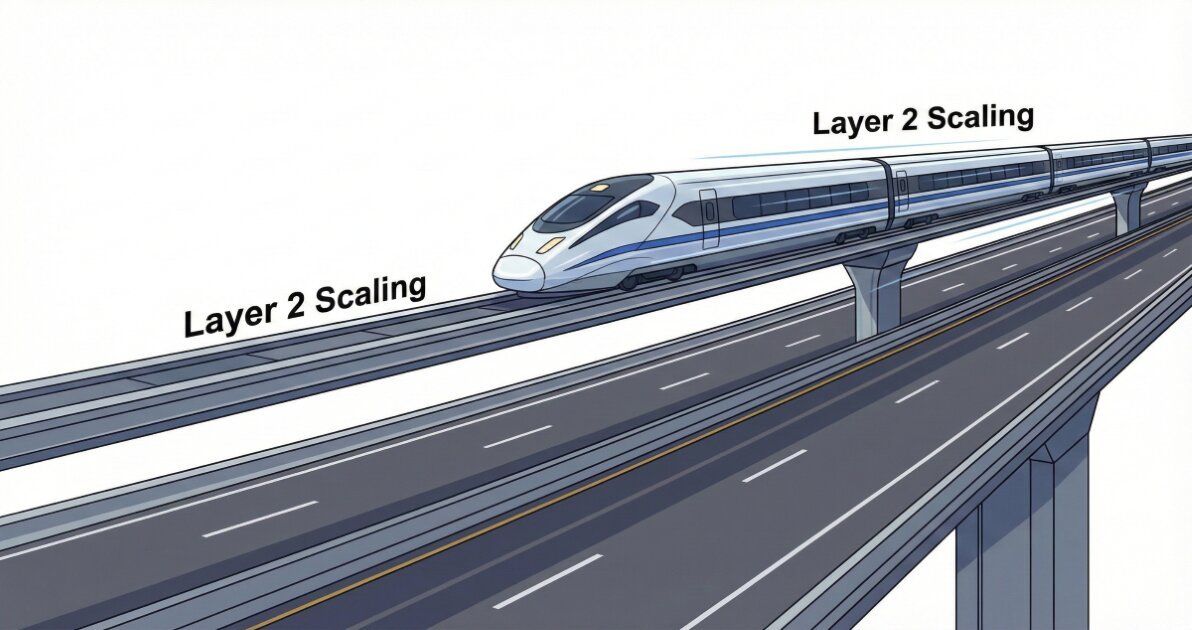
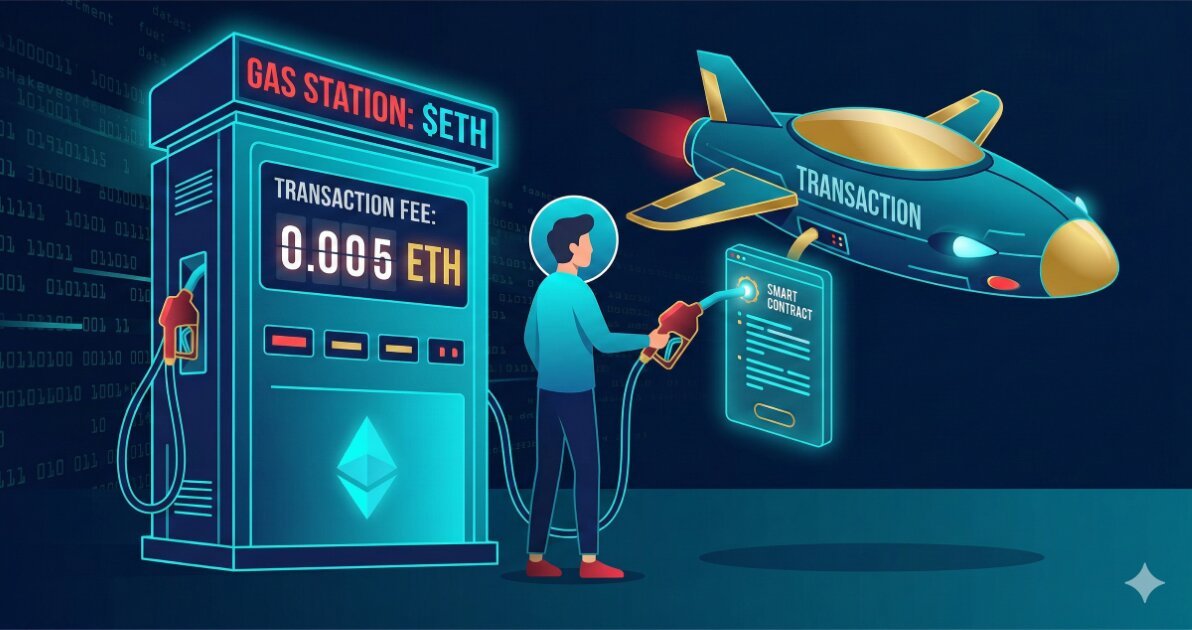
Ethereum mainnet gas costs can consume 1-3% of transaction value during network congestion. Batching multiple operations (claim rewards, swap, rebalance) into a single transaction reduces costs. Layer 2 networks (Arbitrum, Optimism, Base) offer 10-100x lower fees for DeFi operations at the cost of slightly different security assumptions and bridging delays (7 day withdrawal period for optimistic rollups).
Worked Example: Quarterly Rebalancing with Threshold Overrides
Starting portfolio: $100k total, target allocation 50% BTC ($50k), 30% ETH ($30k), 20% stablecoins ($20k).
After 90 days:
BTC appreciates 40% to $70k (58% of portfolio).
ETH appreciates 15% to $34.5k (28.5% of portfolio).
Stablecoins remain $20k (16.5% of portfolio).
Total portfolio value: $124.5k.
Target amounts at new total:
BTC: $62.25k, current $70k (7.75k excess).
ETH: $37.35k, current $34.5k (2.85k deficit).
Stablecoins: $24.9k, current $20k (4.9k deficit).
Rebalancing trades:
Sell 7.75k BTC.
Buy 2.85k ETH.
Net 4.9k to stablecoins.
Transaction costs at 0.1% per trade: approximately $100-150 total. If using DEX aggregators with higher slippage, budget 0.3-0.5% on smaller cap pairs.
Threshold override: if BTC hits 65% of portfolio before the 90 day mark, rebalance immediately to prevent further concentration risk.
Common Mistakes and Misconfigurations
Ignoring withdrawal limitations: Exchange daily withdrawal caps or chain congestion can prevent timely position exits. Confirm limits exceed planned trade sizes before deploying capital.
Mixing hot and cold wallet private keys: Using the same seed phrase for active trading wallets and long term storage eliminates the security benefit of cold storage. Maintain separate key sets.
Underestimating gas cost variance: Scheduling DeFi transactions during US evening hours (low activity) can save 30-50% on gas compared to Asian morning or European afternoon peaks.
Neglecting tax lot tracking: First in first out (FIFO), last in first out (LIFO), and highest in first out (HIFO) methods produce different taxable gains. Track cost basis per transaction to optimize tax liability.
Staking without understanding slashing conditions: Validators can lose 0.5-5% of staked funds for downtime or malicious behavior. Delegating to unproven validators transfers this risk to you.
Assuming stablecoin equivalence: USDT, USDC, and DAI have different custody, redemption, and depeg risk profiles. Diversifying stablecoin holdings reduces single issuer risk.
What to Verify Before You Rely on This
Current fee structures for your exchange or DEX aggregator, as percentage tiers change with volume and market conditions.
Validator commission rates and performance metrics on block explorers before delegating stake, as these shift over time.
Funding rate history for perpetual contracts on your chosen venue over recent 30-90 day periods to understand typical cost of carry.
Gas price trends on Ethereum or target L1 by checking block explorers during your intended transaction windows.
Stablecoin reserve attestations and audit dates, as these should be current within 30-60 days for transparent issuers.
Exchange proof of reserves status if holding assets custodially, particularly after market dislocations or industry incidents.
Tax reporting features of your wallets and exchanges, including whether they support your jurisdiction’s cost basis methods.
Smart contract audit status for any DeFi protocol you’re using for staking or liquidity provision, checking audit dates and whether code has been updated since.
Bridge and Layer 2 withdrawal times for funds you may need liquid, as optimistic rollups impose 7 day delays.
Protocol governance proposals that could change fee structures, emissions, or mechanism design for tokens in your portfolio.
Next Steps
Document your allocation targets and rebalancing rules in a written investment policy, including specific percentage thresholds and time intervals that trigger action.
Set up transaction tracking through portfolio management tools (Rotki, CoinTracker, Koinly) that automatically import trades from exchanges and wallets for accurate cost basis and tax reporting.
Build operational redundancy by maintaining withdrawal access to at least two exchanges and testing cross chain bridge transactions with small amounts before committing large positions.
Category: Crypto Investment Strategies
Related Stories
Evaluating Crypto News Sources for Signal Quality and Latency

Evaluating and Routing Crypto Coin News for Trading Decisions