Chainlink Oracle Network: Interpreting Technical Developments for Trading and Integration Decisions
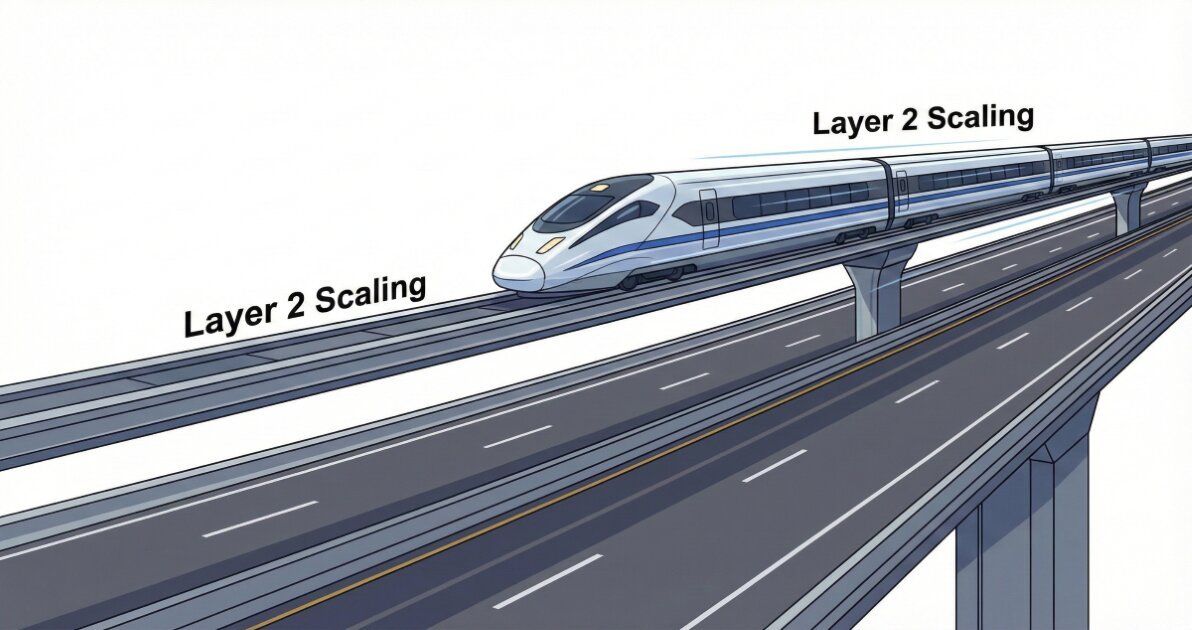
Chainlink operates as the dominant decentralized oracle infrastructure connecting offchain data to onchain smart contracts. For traders and protocol integrators, understanding Chainlink developments means tracking data feed reliability, cross-chain expansion, staking mechanism changes, and potential single points of failure in price feeds that underpin billions in derivatives, lending positions, and automated market maker operations. This article focuses on the technical mechanics practitioners need to evaluate when Chainlink news surfaces.
How Chainlink Price Feeds Actually Function
Chainlink aggregates price data through decentralized oracle networks (DONs). Each price feed aggregates responses from multiple independent node operators running the same job specification. The aggregation contract onchain collects signed price reports, validates cryptographic signatures, and computes a median value that becomes the canonical price for consuming protocols.
Node operators source data from specified exchanges and data providers. The aggregation threshold determines how many valid responses the contract requires before accepting an answer. Deviation thresholds and heartbeat intervals control update frequency. A 0.5% deviation threshold means the feed updates whenever aggregated offchain prices move more than 0.5% from the last onchain answer. A heartbeat interval of 3,600 seconds forces an update even without price movement.
When evaluating feed reliability, check the number of active oracles in a DON, the aggregation threshold as a percentage of total nodes, and the deviation settings. A feed with 21 oracles but only 14 required to answer (66% threshold) carries different security properties than one requiring 80%.
Staking and Cryptoeconomic Security Models
Chainlink introduced a staking mechanism intended to create explicit economic penalties for oracle misbehavior. Stakers lock LINK tokens and earn rewards for supporting feed security. The v0.1 staking pool implemented reputation-based slashing where a committee could vote to penalize dishonest node behavior.
The transition from reputation-based penalties to automated cryptoeconomic slashing represents a significant shift. Automated slashing requires the protocol to programmatically detect oracle faults, a nontrivial problem when multiple valid price sources might temporarily diverge during market volatility or exchange outages.
For traders, the staking mechanism’s maturity affects how you assess systemic oracle risk. Higher stake amounts backing a feed theoretically increase the cost of attack. In practice, check whether slashing conditions have been publicly specified, whether any slashing events have occurred, and what percentage of active node operators participate in staking. An unstaked or minimally staked node set offers no cryptoeconomic assurance beyond reputational risk.
Cross-Chain Messaging Protocol (CCIP) and Interoperability
CCIP enables smart contracts on one blockchain to send messages and transfer tokens to contracts on another chain. The protocol uses separate DONs to validate crosschain transactions. A committing DON on the source chain observes contract calls and creates a Merkle root of pending messages. An executing DON on the destination chain verifies the Merkle proof and triggers the destination contract.
Integration risk centers on finality assumptions. If the source chain reorganizes blocks after CCIP commits a message, the destination execution may occur despite the source transaction being reverted. CCIP implements a risk management network that monitors for anomalies and can pause message execution, but this introduces a trust layer distinct from the core oracle network.
Traders using protocols that rely on CCIP for crosschain liquidity or derivatives settlement need to understand the finality model of each participating chain and whether CCIP waits for sufficient block confirmations before committing. A rapid crosschain arbitrage strategy might execute on the destination chain while the source chain still allows reorgs.
Worked Example: Price Feed Failure During Volatile Market Conditions
Consider a perpetual futures protocol using the ETH/USD Chainlink feed with a 0.5% deviation threshold and 3,600 second heartbeat. During a flash crash, ETH drops 8% in 90 seconds across major exchanges.
- Offchain nodes detect price movement and submit updated reports.
- The aggregation contract receives responses from 15 of 21 nodes within 30 seconds.
- The median price updates onchain, triggering liquidations in the perpetuals protocol.
- Two exchanges experience API outages. Nodes querying those sources return stale prices.
- One node submits an erroneous report due to a data parsing bug.
- The median calculation excludes the outlier, but if enough nodes relied on the offline exchanges, the aggregated price might lag reality by 1-2%.
The protocol liquidates positions based on the lagged feed. Users trading on faster information sources see arbitrage opportunities but may also face liquidation before the feed catches up. The 3,600 second heartbeat means that if prices stabilize within 2%, the feed might not update again for the full hour, leaving the protocol operating on stale pricing.
This scenario illustrates why deviation thresholds, heartbeat frequency, and node data source diversity matter. A feed optimized for low gas costs (wide deviation, long heartbeat) behaves differently under volatility than one configured for precision.
Common Integration Mistakes and Misconfigurations
- Failing to check feed health onchain before consuming price data. The aggregation contract exposes an
updatedAttimestamp. If current block time minusupdatedAtexceeds expected heartbeat by a large margin, the feed may be stale or paused. - Not validating that the returned price is nonzero. During maintenance or after a pause, some feeds may return zero or placeholder values.
- Assuming all feeds use the same decimals. ETH/USD typically returns 8 decimals while some token feeds use 18. Hardcoding decimal assumptions causes calculation errors.
- Ignoring the
answeredInRoundvsroundIdcheck. IfansweredInRoundis less thanroundId, the oracle skipped rounds, indicating potential issues. - Relying on a single feed for critical operations without fallback logic. Multi-feed oracles or hybrid onchain TWAP plus Chainlink designs reduce single point of failure risk.
- Not accounting for gas costs when triggering frequent updates. Protocols that call the oracle on every transaction may face unexpectedly high costs during network congestion.
What to Verify Before You Rely on Chainlink Data
- Current deviation threshold and heartbeat interval for your specific feed. These parameters differ across asset pairs and chains.
- Number of active oracles in the DON and the aggregation threshold percentage.
- Data sources each node operator uses. Concentrating sources on a single exchange creates correlation risk.
- Whether the feed has experienced outages, pauses, or significant deviations in the past six months. Check the feed address on a block explorer and review historical
AnswerUpdatedevents. - Gas costs for calling the aggregator contract on your target chain during typical and congested network conditions.
- Chainlink staking pool status for the feed, including stake amounts and slashing history if available.
- CCIP finality assumptions and risk management network parameters if using crosschain functionality.
- Emergency pause mechanisms and who controls them. Some feeds have multisig admin keys that can halt updates.
- Licensing and commercial terms if integrating feeds into a revenue generating protocol. Some use cases require paid subscriptions beyond the base network fees.
Next Steps
- Deploy a monitor that logs
updatedAttimestamps and price changes for feeds your protocol depends on. Alert on stale data or unusual update patterns. - Test your contract behavior when the oracle returns zero, extremely stale data, or prices outside expected bounds. Ensure fallback logic activates correctly.
- Review Chainlink documentation for the specific feed addresses and configurations on your target chain. Testnet parameters often differ from mainnet.
Category: Crypto News & Insights
Related Stories
Evaluating Crypto News Sources for Signal Quality and Latency

Evaluating and Routing Crypto Coin News for Trading Decisions